
Emotional dysregulation is difficulty managing intense or rapidly changing emotions in ways that feel safe and effective. This condition affects how people monitor, understand, and modulate emotional responses, often disrupting daily functioning, relationships, and safety. Assessment involves clinical interviews and standardized tools, while treatment options range from evidence-informed therapies to structured residential mental health treatment for those needing intensive support.
In this guide, we outline what emotional dysregulation looks like, how to navigate an immediate crisis, what to do when it becomes disruptive to your life, and how to get professional help for ongoing emotional dysregulation issues.
What Causes Emotional Dysregulation?
Emotional dysregulation arises when someone has trouble monitoring, understanding, or modulating emotional responses. Causes can be multifactorial and often overlap.
Genetic and neurobiological factors influence stress reactivity and impulse control. Early attachment disruptions, complex developmental trauma, or prolonged stress shape emotion regulation capacities. Co-occurring psychiatric conditions such as mood disorders, anxiety disorders, posttraumatic stress disorder, personality disorders, and substance use contribute to dysregulation.
Situational stressors like relationship conflict, sleep disruption, or substance use worsen regulation over time.
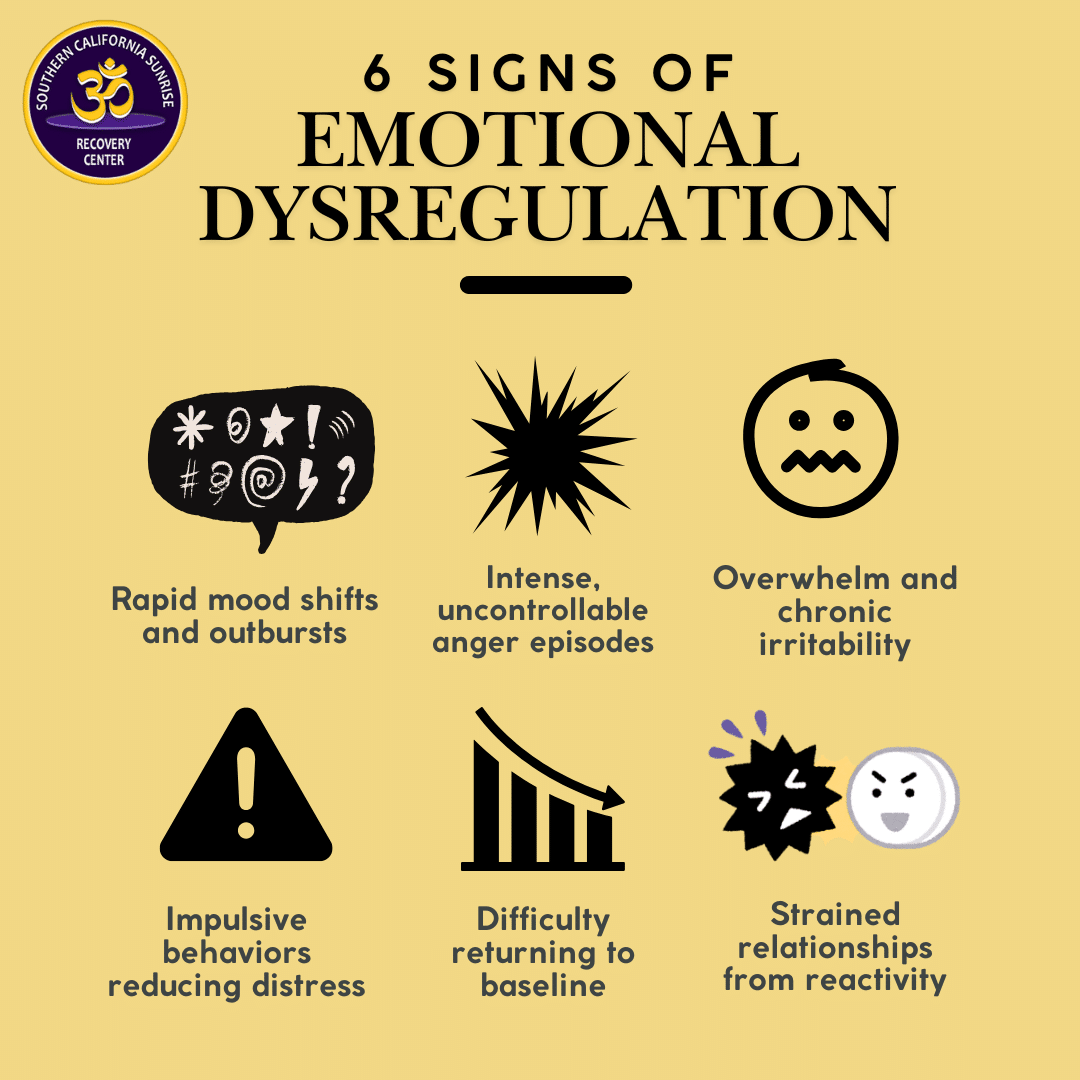
Common Signs of Emotional Dysregulation
Common signs that someone may be struggling with emotional regulation include:
- Rapidly shifting moods, frequent emotional outbursts, or intense anger that feels hard to control
- Persistent feelings of overwhelm, chronic irritability, or panic
- Impulsive behaviors intended to reduce distress, such as self-harm, bingeing, risky substance use, or aggressive acts
- Difficulties returning to baseline after strong emotions or prolonged periods of dysphoria
- Problems with interpersonal relationships due to reactive responses
People seeking a safer, more structured way to stabilize often benefit from an assessment that clarifies contributors and guides care choices, including whether residential support is needed to reduce immediate harm and build skills.
Related read: Can You Die from a Panic Attack? What Expert’s Say
How Emotional Dysregulation Affects Daily Life
When emotions feel out of control, the ripple effects can be exhausting and far-reaching. Sleep becomes disrupted, work performance suffers, school feels impossible, and interpersonal relationships with the people who matter most can become strained or distant. The risk of crises increases, and it can feel like you’re constantly bracing for the next overwhelming moment.
Impact on Work and School
Emotional reactivity and behavioral dysregulation can make it difficult to maintain consistent attendance, meet deadlines, or manage workplace conflicts. Mood swings may lead to impulsive decisions, difficulty concentrating, or withdrawal from colleagues. Students may struggle with academic performance, experience increased absences, or find it challenging to navigate social dynamics in educational settings.
Effects on Relationships and Social Functioning
Relationship satisfaction often declines when emotional dysregulation is present. Loved ones may feel confused, hurt, or exhausted by unpredictable emotional responses. Interpersonal relationships become strained when communication breaks down or when emotional reactivity leads to conflict escalation. Family members and partners may struggle to understand what’s happening, leading to feelings of helplessness or resentment on both sides.
Physical Health and Safety Concerns
The body pays a price for chronic emotional distress. Sleep disruption, changes in appetite, headaches, digestive problems, and fatigue are common. For some, emotional eating becomes a coping mechanism that creates additional health concerns. In more severe cases, suicidal ideation may emerge, particularly when dysregulation co-occurs with mental health conditions like borderline personality disorder or bipolar disorder.
Connection to Specific Mental Health Conditions
Emotional dysregulation is a core feature of several psychiatric disorders. Borderline personality disorder involves intense mood swings and difficulty maintaining emotional stability. Bipolar disorder includes periods of extreme emotional highs and lows that disrupt functioning. ADHD symptoms often include emotional impulsivity and difficulty managing frustration.
Autism spectrum disorders can involve challenges with emotional clarity and regulation, particularly in response to sensory overload or changes in routine. Disruptive mood dysregulation disorder in children and adolescents is characterized by severe, chronic irritability and frequent emotional outbursts. Complex post-traumatic stress disorder and reactive attachment disorder, both rooted in early trauma or attachment disruptions, frequently include significant emotion regulation difficulties.
Brain injuries, whether from accidents or other causes, can also impair the neurological systems responsible for emotional control, leading to sudden personality changes or difficulty managing emotional responses.
When Professional Help Becomes Essential
Recognizing these impacts isn’t about judgment—it’s about understanding that what you’re experiencing is real, and that interventions focused on both immediate safety and long-term skill building can make a meaningful difference. It also helps families prepare for the kind of practical support that can reduce strain and create space for healing.
If suicidal ideation is present or if emotional dysregulation is creating safety concerns, immediate professional support is necessary. The 988 Suicide and Crisis Lifeline provides 24/7 confidential support for people in distress.
Related read: What Residential Mental Health Treatment Is Really Like, Day by Day
Assessment and Measurement: How Clinicians Evaluate Emotional Regulation
A thorough assessment is the foundation of effective treatment. Clinicians take time to understand your unique situation through clinical interviews, standardized measures, behavioral observation, and when needed, formal psychological testing. This comprehensive approach helps clarify what’s contributing to emotional dysregulation and what level of support will be most helpful.
Clinical Interview and History Taking
The assessment process begins with a detailed clinical interview that explores current symptoms, their frequency and intensity, and how they affect daily functioning. Clinicians gather information about psychiatric history, including any previous diagnoses of mental health conditions or mental disorder.
Personal history is essential: early traumatic childhood experiences, attachment patterns (informed by attachment theory), trauma exposure including complex post-traumatic stress disorder or reactive attachment disorder, developmental concerns such as autism spectrum disorders, and any history of brain injuries that might affect emotional processing.
Family psychiatric history helps identify potential genetic contributions to emotional dysregulation. Understanding current stressors—relationship conflicts, work or school pressures, financial strain, or social isolation—provides context for symptom patterns.
Safety assessment is always a priority. Clinicians evaluate for suicidal ideation, self-harm behaviors, substance use, and any risk of harm to others. This helps determine the appropriate level of care, whether that’s an outpatient setting, partial hospitalization programs, or if residential treatment is necessary.
Standardized Assessment Tools
Clinicians use validated scales to measure emotional dysregulation quantitatively and track changes over time:
The Difficulties in Emotion Regulation Scale (DERS) assesses multiple dimensions of emotion regulation, including awareness and understanding of emotions, acceptance of emotional responses, ability to engage in goal-directed behavior when distressed, and access to effective emotional regulation skills.
Disorder-specific measures help clarify diagnosis and severity. The PHQ-9 tracks depressive symptoms. The GAD-7 measures anxiety severity. Mood disorder questionnaires assess for bipolar disorder patterns. Borderline personality disorder severity indices evaluate emotional instability and interpersonal difficulties.
Behavioral rating scales capture both internalizing behaviors (such as withdrawal, sadness, anxiety) and externalizing disorders (such as aggression, impulsivity, oppositional behavior). These are particularly important when assessing children and adolescents, as child psychopathology often manifests through behavioral dysregulation.
Functional impairment measures document how emotional dysregulation affects work, school, relationships, and daily activities, helping establish medical necessity for treatment and guide goal setting.
Collateral Information
When possible and with appropriate consent, clinicians gather perspectives from family members, partners, or care providers who can describe patterns that may not be fully visible in a clinical setting. Teachers, case managers, or previous treatment providers can offer valuable context about behavioral patterns, triggers, and what interventions have or haven’t been helpful in the past.
Psychological Testing
For complex presentations or when diagnosis remains unclear, formal psychological testing provides deeper insight:
Cognitive assessment identifies attention problems (relevant to ADHD symptoms), memory difficulties, or cognitive impairments from brain injuries that might complicate treatment.
Personality assessment clarifies whether borderline personality disorder, other personality disorders, or pervasive patterns are contributing to emotional dysregulation.
Trauma-focused evaluation explores the impact of complex post-traumatic stress disorder or developmental trauma on current functioning, particularly when attachment theory principles suggest early relational wounds.
Neuropsychological testing may be recommended when brain injuries, autism spectrum disorders, or other neurological conditions are suspected contributors to emotional regulation difficulties.
Ongoing Measurement During Treatment
Assessment doesn’t stop at intake. Progress is tracked through repeated administration of standardized scales, behavioral incident logs that document crisis frequency and triggers, session-by-session monitoring of skill use and emotional regulation strategies, and functional markers such as ability to maintain employment, sustain relationships, and manage stress without crisis.
This data-driven approach helps treatment teams adjust interventions in real-time, celebrate meaningful progress, and identify when a different level of care might be needed.
Assessment results guide treatment intensity decisions in a collaborative way—helping you and your care team determine whether outpatient skills training may be sufficient, whether partial hospitalization programs provide the right balance of structure and flexibility, or whether residential care would provide the structured environment needed for stabilization. A clear assessment also opens the door to important conversations about workplace or educational accommodations and creating a safety plan that works for your life.
Evidence-Informed Treatments for Emotional Dysregulation
There is no one-size-fits-all approach to healing. Treatment decisions are based on the severity of symptoms, safety concerns, co-occurring conditions, and most importantly—your individual goals and what matters to you. Our team works with you to create a path forward that makes sense for your life.
Psychotherapies That Target Emotion Regulation
Dialectical Behavior Therapy (DBT) is the most extensively researched treatment for severe emotional dysregulation, particularly when borderline personality disorder, self-harm, or suicidal ideation is present. This dialectical behavioral therapy approach combines individual therapy with skills training groups focused on four key modules:
- Mindfulness teaches present-moment awareness and emotional clarity, helping you observe emotions without being overwhelmed by them
- Distress tolerance provides crisis survival strategies and self-regulation tools for managing intense emotional situations
- Emotion regulation builds understanding of emotional patterns and teaches practical emotional regulation skills to modify unwanted emotions
- Interpersonal effectiveness improves relationship satisfaction through assertiveness, boundary-setting, and conflict resolution
DBT was originally developed for borderline personality disorder but has been adapted effectively for other psychiatric disorders including bipolar disorder, eating disorders, and substance use disorders.
Cognitive Behavioral Therapy (CBT) addresses unhelpful thinking patterns that intensify emotional responses. By identifying and challenging distorted thoughts, individuals learn to reduce emotional reactivity and develop more balanced perspectives. CBT can be particularly effective for depressive symptoms, anxiety disorders, and externalizing disorders when combined with behavioral interventions.
Emotion-Focused Therapy (EFT) and Schema Therapy work at deeper levels when attachment theory suggests that early relational trauma or longstanding maladaptive patterns underlie current dysregulation. These approaches help individuals understand and transform the emotional wounds connected to reactive attachment disorder, complex post-traumatic stress disorder, or childhood experiences that shaped their emotional responses.
Trauma-Focused Cognitive Behavioral Therapy (TF-CBT) specifically addresses the impact of trauma on emotional regulation, particularly relevant for those with complex post-traumatic stress disorder or child psychopathology rooted in adverse experiences.
Family-Based Interventions and Family Therapy are essential when family dynamics contribute to or maintain emotional dysregulation. These approaches increase support, improve communication patterns, reduce conflict, and help family members develop their own emotional regulation skills. Family therapy is particularly helpful for children and adolescents with disruptive mood dysregulation disorder, autism spectrum disorders, or ADHD symptoms where family stress and interpersonal relationships within the home significantly impact functioning.
Medication Management
While no medication directly treats emotional dysregulation as a standalone condition, psychiatric medications can address co-occurring mental health conditions and specific symptoms that worsen regulation:
Mood stabilizers such as lithium, valproate, or lamotrigine may be prescribed for bipolar disorder to reduce the intensity and frequency of mood swings and improve overall emotional stability.
Antidepressants (SSRIs, SNRIs) can help when depressive symptoms, anxiety, or trauma-related symptoms contribute to emotional dysregulation. For some individuals with borderline personality disorder, certain antidepressants may help reduce emotional reactivity.
Antipsychotic medications at low doses sometimes help manage severe emotional reactivity, particularly when mood swings are rapid and intense or when there are psychotic features.
ADHD medications (stimulants or non-stimulants) can improve emotional regulation indirectly by reducing ADHD symptoms like impulsivity, distractibility, and frustration intolerance.
Anti-anxiety medications are used cautiously and typically short-term for acute anxiety that interferes with functioning, though they don’t address the underlying dysregulation.
All medications are prescribed by a psychiatrist, monitored closely for effectiveness and side effects, and combined with psychotherapy for best outcomes. Medication alone rarely resolves emotional dysregulation but can create enough stability to engage meaningfully in therapy.
Skills Training and Adjunctive Therapies
Beyond traditional talk therapy, several complementary approaches support the development of self-regulation tools:
Group-based skills training provides a supportive environment to learn and practice emotional regulation skills alongside others facing similar challenges. The shared experience reduces isolation and allows for peer modeling and feedback.
Mindfulness-based interventions cultivate awareness of thoughts, emotions, and bodily sensations without judgment, improving emotional clarity and reducing automatic reactivity.
Somatic and body-based therapies including breathwork, progressive muscle relaxation, and yoga help individuals recognize and respond to the physical sensations that accompany emotions, creating a bridge between body awareness and emotional regulation.
Expressive therapies such as art therapy, music therapy, and drama therapy provide alternative channels for emotional expression, particularly valuable for individuals who struggle to verbalize their internal experiences or for those with autism spectrum disorders who may process emotions differently.
Experiential therapies like equine therapy create opportunities to practice emotional regulation skills in real-world, non-clinical contexts. Working with horses, for example, requires calm, clear communication and immediate emotional awareness—providing powerful, concrete feedback about one’s emotional state.
Lifestyle interventions addressing sleep hygiene, nutrition (including addressing emotional eating patterns), and regular physical activity create a physiological foundation that supports better emotional regulation. These aren’t substitutes for therapy but essential complements that enhance treatment effectiveness.
Level of Care: Matching Intensity to Need
Treatment for emotional dysregulation occurs across a continuum of care settings:
Outpatient therapy (individual, group, or family therapy once or twice weekly) works well for mild to moderate symptoms when safety is stable and the person has adequate support systems.
Intensive outpatient programs (IOP) provide several hours of structured therapy multiple days per week while allowing individuals to live at home and maintain work or school commitments.
Partial hospitalization programs (PHP) offer full-day structured programming with psychiatric oversight, appropriate when symptoms are more severe but 24/7 supervision isn’t necessary.
Residential treatment provides 24/7 structured care for individuals whose emotional dysregulation creates significant safety concerns, severely impairs functioning, or hasn’t responded to lower levels of care. This is often appropriate for severe borderline personality disorder, bipolar disorder during unstable periods, disruptive mood dysregulation disorder that creates family crisis, or when co-occurring conditions like substance use complicate outpatient management.
Inpatient psychiatric hospitalization is the most acute level of care, typically brief and focused on immediate crisis stabilization when suicidal ideation or other safety risks require locked-unit supervision.
When Residential Care Is Appropriate
Residential mental health treatment may be recommended for individuals with moderate to severe symptoms who require 24/7 structured support to reduce immediate risk, stabilize medication, and engage in intensive skills work. Residential programs that are gender-specific, licensed, and provide psychiatric oversight can offer a safer environment for stabilization and practice of new skills.
All treatments are offered with a focus on measurable goals and collaborative planning. Interventions are designed to support stabilization and the development of durable coping skills rather than promising a single cure.
Residential Mental Health Care: Program Structure and What to Expect
Residential care provides 24/7 structure and clinical oversight for adults whose safety or functioning is compromised.
Clinical and Safety Structure
Licensed clinical staff and regular psychiatric oversight with scheduled psychiatric assessments and medication reviews ensure consistent care. 24/7 staffing manages crises, ensures safety, and provides consistent structure.
On-site psychological testing addresses complex presentations or unclear diagnoses. Gender-specific homes support safety and comfort for residents.
Therapeutic Schedule and Services
Individual therapy, generally around two sessions per week, provides personalized support. Group therapy and skills groups focus on emotion regulation, distress tolerance, interpersonal skills, and relapse prevention.
Case management coordinates care, benefits, and discharge planning. Family visitation and family therapy repair relationships and support aftercare. Complementary therapies such as equine therapy, art therapy, breathwork, yoga, and structured outings reinforce skills in varied contexts. Access to offsite gym and community resources supports physical wellness.
Length of Stay and Transitions
Length of stay varies according to clinical need, safety, insurance, and progress toward individualized goals. Residential stays aim to stabilize, reduce immediate risk, and prepare for step-down care such as intensive outpatient or ongoing outpatient therapy.
Discharge planning includes a written aftercare plan, community therapy referrals, and family involvement as appropriate. Programs often provide an environment designed to reduce crisis frequency while teaching practical skills that support long-term wellbeing and community functioning.
Transition planning focuses on maintaining gains and connecting to outpatient resources to continue skill building.
Measuring Progress and What to Expect Over Time
Progress in emotional regulation is tracked using multiple indicators:
Repeated standardized measures (for example, DERS, PHQ-9, GAD-7) quantify symptom change.
Behavioral markers such as reduced crisis calls, fewer hospitalizations, decreased self-harm or substance use, and improved adherence to treatment plans track real-world improvement.
Observed skill use in real-world situations and improved interpersonal functioning reported by the person and family demonstrate practical progress.
Psychiatric evaluation of medication response and side effects ensures appropriate pharmacological support.
Timeframes vary: some people notice reduced crisis frequency within weeks of stabilization, while durable skill acquisition can take months of consistent practice. Residential programs often aim to stabilize acute risk and equip people with tools to continue progress in outpatient settings.
Get Calm, Structured Support for Emotional Dysregulation
If emotional dysregulation is disrupting safety, relationships, or daily life, speaking with a licensed clinician can clarify next steps. Southern California Sunrise Recovery Center offers gender-specific residential homes with 24/7 clinical oversight, on-site psychological testing, family involvement, and services designed to support stabilization and skill building.
Verify your insurance coverage and speak with our admissions team to learn whether residential mental health treatment may be the right next step for you or a loved one.
Emotional Dysregulation FAQ
Here are some questions people also ask about emotional dysregulation.
Can emotional dysregulation improve without formal treatment?
Mild or situational dysregulation can improve with supportive relationships, lifestyle changes, and self-directed learning of coping skills. However, when dysregulation is persistent, severe, or linked to self-harm, substance use, or functional impairment, evidence-informed professional treatment is more likely to reduce risk and produce sustained improvement.
Are therapies different for adults versus adolescents with emotional dysregulation?
Therapeutic principles are similar but adapted for developmental stage. Adolescents often need greater family involvement, school coordination, and shorter, developmentally appropriate interventions. Some therapies have adolescent-specific protocols, such as DBT-A for younger people. Adult treatment prioritizes autonomy, workplace functioning, and adult interpersonal patterns.
How long does treatment for emotional dysregulation usually take?
There is wide variation based on severity, diagnosis, and individual response. Short-term gains may appear within weeks, structured outpatient programs often run several months, and comprehensive DBT programs commonly span six months to a year. Residential stays for stabilization may range from a few weeks to several months depending on clinical need and insurance. Treatment length is individualized and guided by measurable goals.
Can changes in sleep, nutrition, or exercise make a meaningful difference?
Yes. Regular sleep, balanced nutrition, and consistent physical activity support brain function, reduce stress reactivity, and improve mood regulation. These lifestyle changes are complementary to psychotherapy and medication rather than standalone cures for severe dysregulation.
Are telehealth or online therapy options effective for regulation skills training?
Telehealth and online skills-training programs can be effective for many people and improve access to care. Remote delivery is often suitable for skills groups, individual therapy, and medication management. For people at high risk of harm or those needing 24/7 supervision, in-person residential care or a hybrid model may be more appropriate.
How can family members support someone who is emotionally dysregulated without becoming overwhelmed?
Set compassionate boundaries, participate in family therapy when possible, and maintain your own support system. Learn about emotion regulation strategies and create a clear crisis plan. Use respite and peer support to avoid burnout, and coordinate with the person’s treatment team to share responsibility and reduce family strain.
What immediate steps should I take if someone is a danger to themselves or others?
If there is immediate danger, call emergency services (911 in the United States) or go to the nearest emergency department. Contact local crisis services or the 988 Crisis Lifeline for urgent support. If safe, stay with the person, remove means of harm, and reach out to their treatment providers and emergency contacts.
Are there legal protections (like the ADA) for students or employees with disabling emotional dysregulation?
Potential protections may apply under the Americans with Disabilities Act if symptoms substantially limit one or more major life activities. Students may have accommodations through Section 504 or institutional disability services, and employees may request reasonable accommodations through their employer’s interactive process. Eligibility, documentation requirements, and available accommodations vary. For specific legal advice, consult a qualified attorney or disability services office.
How do clinicians measure progress in emotional regulation over time?
Clinicians use repeated standardized scales (for example, emotion regulation inventories, depression and anxiety scales), logs of behavioral incidents, frequency of crises or hospitalizations, medication response, clinician observation, and reports from the person and family about daily functioning and skill use.
What questions should I bring to a clinician during an initial assessment?
Helpful questions include:
- What is the likely diagnosis and what contributes to these symptoms?
- What treatment options do you recommend and why?
- Is residential care appropriate now, and what would it involve?
- How long might treatment take and what are the measurable goals?
- How do you handle safety planning and crisis management?
- Which clinicians will be involved and what are their qualifications?
- How is family involved in care and discharge planning?
- Is this program in-network with my insurance and what is the authorization process?
- What follow-up and step-down care will be available on discharge?