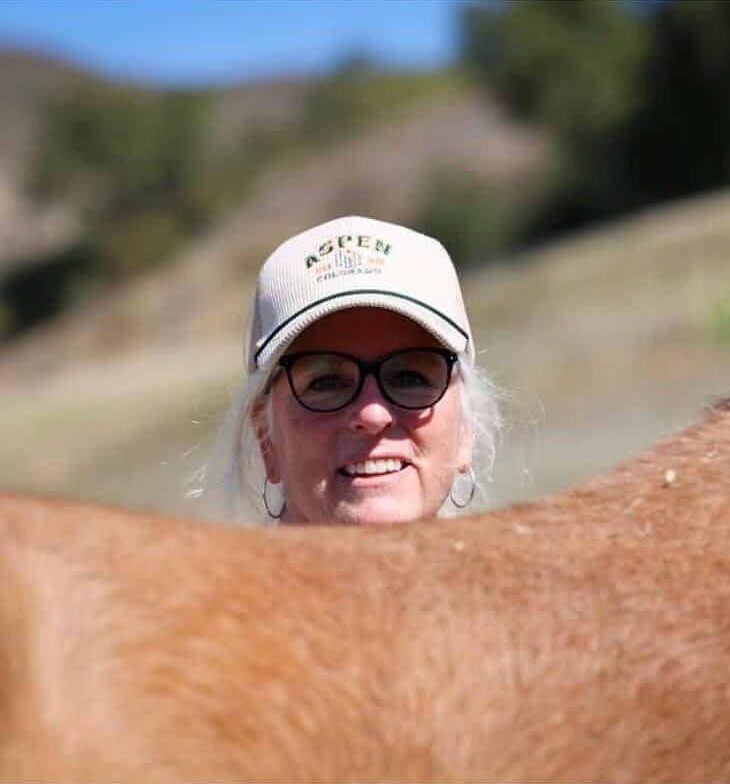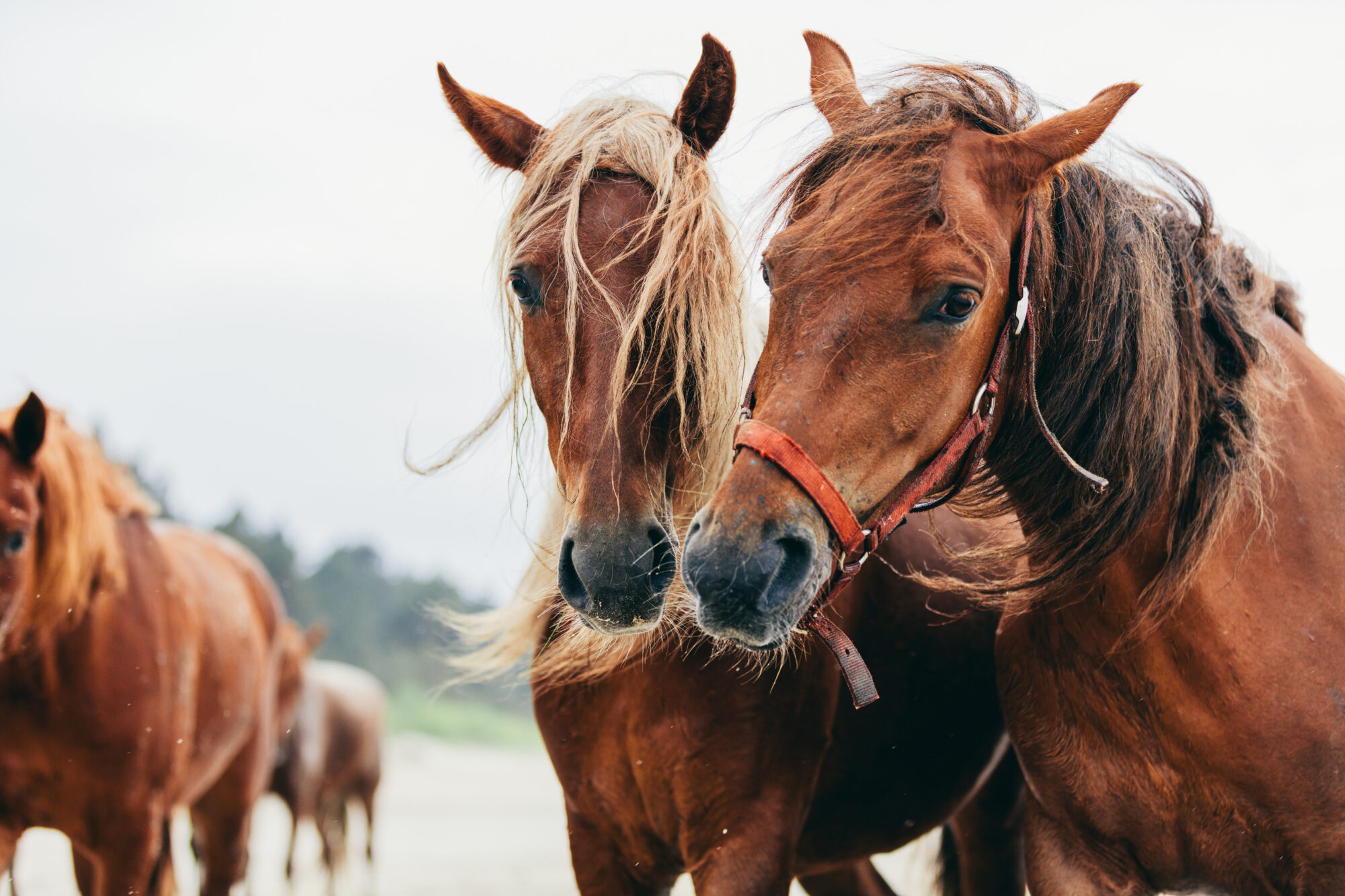
Here's who you will be working with during equine therapy treatment at Southern California Sunrise Recovery Center.
Equine Therapy at Southern California Sunrise Recovery Center is a structured, evidence-informed treatment approach that uses meaningful interactions between patients and horses to support emotional and psychological healing.
Under the guidance of licensed therapists trained in Equine-Assisted Therapy, patients engage in activities such as grooming, feeding, leading, and groundwork—each tailored to specific therapeutic goals. Because horses are highly sensitive to the emotions and body language of those around them, they serve as honest, non-judgmental partners who provide immediate feedback that deepens self-awareness.
Our Equine Therapy sessions are held in a serene Orange County setting that encourages calm, reflection, and focus on recovery.
Learn more about equine therapy at Southern California Sunrise Recovery Center.
Sue came to equine work later in her career. Upon finding the wisdom of horses, she was quickly finding ways to bring this work to her clients. Her horse, Mateo, has been her greatest teacher about horses but also about how to establish relationships, the power of two way communication, trust and the magic of going slow.
Over her 30 year career there has been nothing more exciting than partnering with horses in the therapeutic process. Horses can truly heal in ways other humans can always do.
Deanne has been a horse owner for over 20 years. Her understanding of the gift horses give us through their peaceful, intuitive nature piqued her interest in equine assisted therapy.
She went through training to learn skills for conducting an equine assisted session. She has partnered with her horses and equine therapy organizations to facilitate groups for the past five years.
She is the oldest horse at the barn in her 40’s. Hackney ponies are known for their elegant appearance and animated gait. This is true for Gigi too. She is often a great place for people to start with horses as her size and sweet welcoming spirit becomes a place to move thru any fears.
She is an Arabian horse. Arabian horses have roots in West Asia. They have a distinctive head shape and high tail carriage. She is in her late 20’s. Many experience her to have a very calm demeanor and willing spirit.
He is a larger horse which can offer different experiences. He is in his early 20’s. Hе loves to be with people and can show up in different ways depending on the day. That makes it fun to interact with him as you aren’t always sure what might happen.
He is a true rescue horse. He was rescued before heading to a sad demise. His previous owner had a huge heart for all who needed care and Huck was no different.
As a rescue horse, we don’t really know his story. Often horses who need rescue have reached the end of expectation of what an owner might have needed in a horse or it just isn’t a fit between horse/owner. Huck can be silly and fun. He also a great teacher of boundaries.
Equine Therapy offers a range of meaningful benefits for individuals navigating substance abuse, depression, anxiety, PTSD, and other mental health challenges.
Working with horses builds self-esteem, as successfully caring for and connecting with such a large, perceptive animal creates a genuine sense of accomplishment and capability.
The nonverbal nature of horse communication encourages patients to develop stronger emotional awareness, helping them better identify, understand, and manage their own feelings. Building trust with a horse (which requires patience, consistency, and presence) mirrors the same skills needed to rebuild trust in relationships and in oneself.
Together, these experiences promote lasting personal growth that extends well beyond the therapy session.
Southern California Sunrise Recovery Center
We firmly believe that the internet should be available and accessible to anyone, and are committed to providing a website that is accessible to the widest possible audience, regardless of circumstance and ability.
To fulfill this, we aim to adhere as strictly as possible to the World Wide Web Consortium’s (W3C) Web Content Accessibility Guidelines 2.1 (WCAG 2.1) at the AA level. These guidelines explain how to make web content accessible to people with a wide array of disabilities. Complying with those guidelines helps us ensure that the website is accessible to all people: blind people, people with motor impairments, visual impairment, cognitive disabilities, and more.
This website utilizes various technologies that are meant to make it as accessible as possible at all times. We utilize an accessibility interface that allows persons with specific disabilities to adjust the website’s UI (user interface) and design it to their personal needs.
Additionally, the website utilizes an AI-based application that runs in the background and optimizes its accessibility level constantly. This application remediates the website’s HTML, adapts Its functionality and behavior for screen-readers used by the blind users, and for keyboard functions used by individuals with motor impairments.
If you’ve found a malfunction or have ideas for improvement, we’ll be happy to hear from you. You can reach out to the website’s operators by using the following email michael@socalsunrise.com
Our website implements the ARIA attributes (Accessible Rich Internet Applications) technique, alongside various different behavioral changes, to ensure blind users visiting with screen-readers are able to read, comprehend, and enjoy the website’s functions. As soon as a user with a screen-reader enters your site, they immediately receive a prompt to enter the Screen-Reader Profile so they can browse and operate your site effectively. Here’s how our website covers some of the most important screen-reader requirements, alongside console screenshots of code examples:
Screen-reader optimization: we run a background process that learns the website’s components from top to bottom, to ensure ongoing compliance even when updating the website. In this process, we provide screen-readers with meaningful data using the ARIA set of attributes. For example, we provide accurate form labels; descriptions for actionable icons (social media icons, search icons, cart icons, etc.); validation guidance for form inputs; element roles such as buttons, menus, modal dialogues (popups), and others. Additionally, the background process scans all of the website’s images and provides an accurate and meaningful image-object-recognition-based description as an ALT (alternate text) tag for images that are not described. It will also extract texts that are embedded within the image, using an OCR (optical character recognition) technology. To turn on screen-reader adjustments at any time, users need only to press the Alt+1 keyboard combination. Screen-reader users also get automatic announcements to turn the Screen-reader mode on as soon as they enter the website.
These adjustments are compatible with all popular screen readers, including JAWS and NVDA.
Keyboard navigation optimization: The background process also adjusts the website’s HTML, and adds various behaviors using JavaScript code to make the website operable by the keyboard. This includes the ability to navigate the website using the Tab and Shift+Tab keys, operate dropdowns with the arrow keys, close them with Esc, trigger buttons and links using the Enter key, navigate between radio and checkbox elements using the arrow keys, and fill them in with the Spacebar or Enter key.Additionally, keyboard users will find quick-navigation and content-skip menus, available at any time by clicking Alt+1, or as the first elements of the site while navigating with the keyboard. The background process also handles triggered popups by moving the keyboard focus towards them as soon as they appear, and not allow the focus drift outside of it.
Users can also use shortcuts such as “M” (menus), “H” (headings), “F” (forms), “B” (buttons), and “G” (graphics) to jump to specific elements.
We aim to support the widest array of browsers and assistive technologies as possible, so our users can choose the best fitting tools for them, with as few limitations as possible. Therefore, we have worked very hard to be able to support all major systems that comprise over 95% of the user market share including Google Chrome, Mozilla Firefox, Apple Safari, Opera and Microsoft Edge, JAWS and NVDA (screen readers), both for Windows and for MAC users.
Despite our very best efforts to allow anybody to adjust the website to their needs, there may still be pages or sections that are not fully accessible, are in the process of becoming accessible, or are lacking an adequate technological solution to make them accessible. Still, we are continually improving our accessibility, adding, updating and improving its options and features, and developing and adopting new technologies. All this is meant to reach the optimal level of accessibility, following technological advancements. For any assistance, please reach out to michael@socalsunrise.com