Nutrition and mental health are interconnected systems in which the foods you consume directly influence brain chemistry, gut function, and emotional regulation.
For individuals navigating anxiety, depression, mood disorders, or other mental health challenges, dietary patterns are increasingly recognized as a modifiable factor that may support, or undermine, overall psychological well-being.

Nutrition and Mental Health
There is no doubt that diet affects many aspects of health, including weight, athletic performance, and risk of chronic diseases like heart disease and diabetes. Researchers have found that it could also affect mental health and well-being. Continue reading to learn more about nutrition and mental health.
Table of Contents
Nutrition and mental health go hand-in-hand. When your body is nourished and taken care of, your brain has what it needs to not only survive…but thrive. Nutrition and mental health are interlinked, but nutrition cannot cure diagnoses mental health disorders. However, nutrition and mental health must both be taken into consideration for integrated, holistic, full-person healing.
People seeking a safe place to stabilize and understand the factors driving their symptoms will benefit from understanding how food affects the mind. At Southern California Sunrise Recovery Center, we incorporate nutrition education into a broader residential mental health treatment approach that addresses the whole person, not just isolated symptoms.
The Gut-Brain Axis: Your Second Brain Is in Your Stomach
Most people know the brain controls how we think and feel. Fewer realize that the gut holds the second-largest concentration of neurons in the entire body.
These two systems, the brain and the gut, communicate bidirectionally through what researchers call the gut-brain axis (GBA). This connection is not metaphorical. It is an active physiological network involving the enteric nervous system (ENS), which consists of approximately 100 million nerve cells lining the gastrointestinal tract from top to bottom.
Have you ever felt a knot in your stomach before a difficult conversation, or noticed that anxiety seems to “live” in your abdomen? Those sensations reflect real neurological communication between your gut and your brain.
Research has linked the absence of specific gut bacteria to psychiatric conditions including anxiety, depression, ADHD, and autism spectrum disorders. This is just one way nutrition and mental health are directly linked.
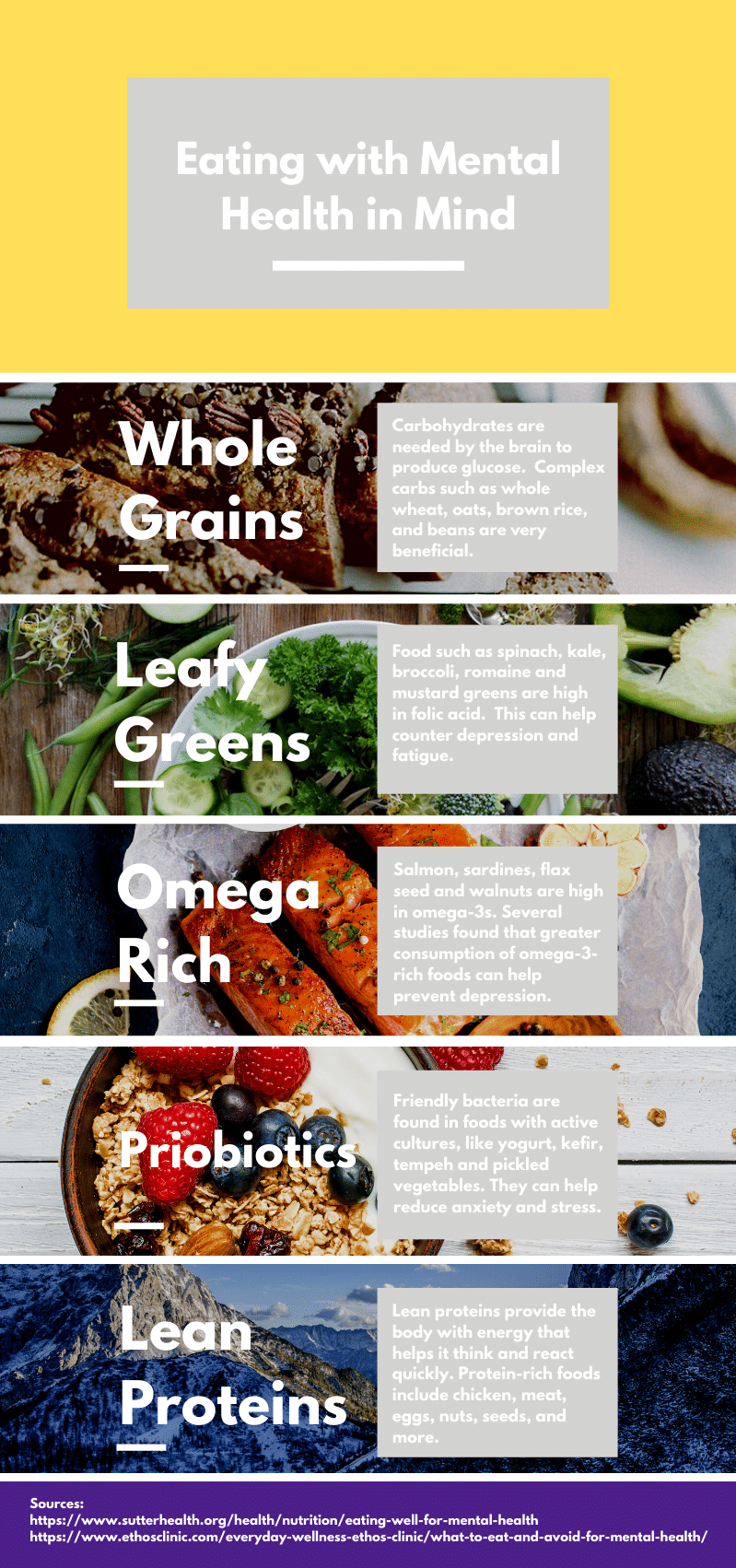
What Is Nutritional Psychiatry?
Nutritional psychiatry is a growing clinical subspecialty that examines how dietary patterns influence the prevention and management of mental health conditions. It represents a shift in how clinicians think about psychiatric care, from focusing solely on medication and therapy to recognizing that what people eat may meaningfully affect their symptoms and treatment outcomes. For whole-person healing, nutrition and mental health must both be supported.
The field has gained significant credibility over the past decade. Clinical practice guidelines in several countries now include dietary recommendations as a foundational element of mood disorder management. Research increasingly suggests that whole-food dietary patterns, rather than isolated supplement interventions, are associated with more robust mental health benefits.
For individuals already receiving treatment for depression, anxiety disorders, or other conditions in a residential setting, nutritional awareness may serve as a meaningful complement to clinical care.
How Food and Mood Are Connected
Healthy foods support the growth of beneficial gut bacteria, which in turn promotes neurotransmitter production. When neurotransmitter production is functioning well, the brain is better equipped to regulate mood, focus, and stress responses.
Here’s what we know about nutrition and mental health: Diets high in refined sugars and ultra-processed foods work in the opposite direction. They promote systemic inflammation, which research has linked to impaired neurotransmitter function and increased risk of depression.
Sticking to a nutritionally dense diet is not a cure for mental illness. But it may reduce symptom burden, support therapeutic progress, and give the brain the resources it needs to function at its best.
Understanding How Sugar Affects the Brain
Nutrition and mental health effect your brain in a big way. Glucose is the brain’s primary energy source. Without it, cognitive function, including memory, learning, and emotional regulation, becomes compromised. The challenge is that the type of sugar most people reach for is not the type that supports healthy brain function.
Fruit
Fruit contains the natural sugars sucrose and fructose, as well as other brain-healthy nutrients such as potassium, vitamin C, and folate. Whole fruits are better for you than dried fruits or juices since they don’t contain added sugars. Whole fruits also contain fiber and water, which help to fill you up and satiate the cravings.
It might take some willpower, but if you can forgo the candy bars and ice cream for a few weeks you’ll soon find that a bowl of strawberries starts to taste just as sweet. And you won’t get that icky sugar crash 20 minutes later.
Blueberries:
Blueberries are loaded with antioxidants and are thought by scientists to boost memory.
Rasberries:
Raspberries help to fight inflammation of the neurons, which will prevent neurological damage in your brain.
Grapes:
Grapes improve certain cardiovascular functions, leading to better vascular flexibility, and better blood flow; including blood flow to the brain.
Strawberries:
Strawberries contain antioxidants that fight off free radicals, which can damage cells and eventually lead to memory loss.
Strawberries:
Strawberries contain antioxidants that fight off free radicals, which can damage cells and eventually lead to memory loss.
Grapes:
Grapes improve certain cardiovascular functions, leading to better vascular flexibility, and better blood flow; including blood flow to the brain.
Transitioning from processed sweets to whole fruit takes time and patience. Sugar’s addictive quality is real, and the brain requires an adjustment period to recalibrate its dopamine response. Starting with gradual substitutions, fruit instead of candy, a few days at a time, tends to be more sustainable than abrupt elimination.
Nutrition, the Microbiome, and Psychobiotics
One of the most significant advances in nutritional psychiatry is the growing recognition that gut microbiome diversity is closely linked to mental health resilience. A diverse microbiome, one containing a wide range of beneficial bacterial species, is more adaptable, less susceptible to inflammatory overgrowth, and better equipped to produce the neurotransmitters that regulate mood.
Fiber-rich foods are especially important here. Insoluble fiber found in vegetables, legumes, whole grains, and fruit skins feeds beneficial gut bacteria, increasing diversity over time. Fermented foods such as yogurt, kefir, sauerkraut, and kimchi introduce live cultures that may further support microbial balance.
An emerging area of research involves psychobiotics, probiotic and prebiotic interventions specifically designed to produce mental health benefits through the gut-brain axis. Early clinical trials have examined psychobiotics in the context of depression, anxiety, and stress response, with some showing modest but meaningful improvements in mood outcomes.
While psychobiotics are not a replacement for clinical treatment, they represent an evolving area where nutrition science and psychiatry are beginning to intersect in ways that may have practical implications for individuals in residential mental health care. For those also navigating co-occurring substance use challenges, a dual diagnosis treatment approach that addresses both mental health and physical health, including nutrition, may provide additional layers of support.
The Mediterranean Diet and Mental Health Evidence
Among dietary patterns studied for mental health benefits, the Mediterranean diet has the most robust evidence base. Characterized by vegetables, fruits, legumes, whole grains, olive oil, fish, and limited processed foods, this pattern is associated with reduced risk of depression and anxiety in multiple randomized controlled trials.
Researchers believe the Mediterranean diet’s benefits stem from several mechanisms: its anti-inflammatory composition, its support for microbiome diversity through high fiber intake, and its provision of key nutrients, omega-3 fatty acids, B vitamins, antioxidants, that directly support brain function.
You do not need to follow any specific labeled “diet” to benefit from these principles. The core message from nutritional psychiatry research is consistent: whole foods over processed ones, dietary diversity over restriction, and gradual sustainable change over short-term approaches.
Nutrients Linked to Depression Risk and Mood Support
If your body is missing key nutrients, your mood can be effected. Here are some known connections:
Vitamin D
Vitamin D deficiency has been associated with increased rates of depression. Most vitamin D comes from sun exposure, but dietary sources include oily fish, fortified dairy products, and eggs.
Omega-3 Fatty Acids
Omega-3s help preserve the myelin sheath that protects nerve cells, which may reduce the risk of mood disorders and certain brain conditions. Cold-water fish (salmon, mackerel, sardines), flaxseeds, chia seeds, and walnuts are strong sources.
Antioxidants
Antioxidants help clear free radicals from the body. An accumulation of free radicals, called oxidative stress, has been linked to anxiety and depression. Berries, leafy vegetables, and soy are particularly rich sources.
B Vitamins
Vitamins B-12, B-9 (folate), and folic acid support the entire nervous system, including the brain. B-12 deficiency can produce symptoms that mirror depression, including fatigue, low mood, and cognitive difficulty. Sources include eggs, meat, poultry, fish, and dark leafy vegetables.
For individuals receiving treatment for mood disorders in a structured residential environment, nutritional support may complement therapeutic and psychiatric care in meaningful ways.
Foods to Avoid
No single food causes a mental health condition. What matters most is the overall pattern of eating over time. That said, certain categories tend to undermine mental health when consumed regularly.
Alcohol
Alcohol can contribute to mental health complications even before dependence develops. It may worsen anxiety and depression symptoms significantly. For individuals already managing these conditions, alcohol is best avoided entirely.
Ultra-Processed Foods
These are products engineered for palatability with minimal nutritional value; they promote inflammation and blood sugar instability. Research links frequent consumption of ultra-processed foods to higher rates of depression and cognitive decline
Excessive Caffeine
Caffeine may amplify anxiety and disrupt sleep, both of which affect mood. If you are not ready to eliminate caffeine, transitioning to green tea or matcha can reduce the intensity of stimulant effects while preserving some of the mood-related benefits at lower doses.
Building a Healthier Relationship with Food
Our culture often frames food in moral terms, “good” foods and “bad” foods, rewards and punishments. That framing can create shame cycles that make healthy change harder, not easier.
A more useful framing is nutritional: food is fuel. The quality of that fuel affects how the brain and body perform, including how well they manage stress, regulate emotion, and respond to treatment.
Sustainable dietary change happens gradually. Cutting coffee by one cup at a time, substituting fruit for candy a few days per week, choosing baked chicken over fried, these small shifts accumulate into meaningful differences in how you feel. The goal is not perfection. The goal is a general pattern that supports your brain over the long term.
The holistic therapy programs at Southern California Sunrise Recovery Center are designed to support exactly this kind of whole-person wellness, addressing physical, emotional, and behavioral health within a structured residential environment.
When Nutrition Is Part of a Larger Care Picture
Dietary changes are not a substitute for professional mental health treatment. For individuals experiencing moderate to severe symptoms of anxiety, depression, bipolar disorder, PTSD, or related conditions, evidence-based clinical care remains the foundation of recovery.
What nutrition offers is a meaningful supporting role. A well-nourished brain is better positioned to engage with therapy, respond to psychiatric support, and build the coping tools needed for long-term wellness. For those already in (or considering) a structured residential program, understanding the connection between nutrition and mental health may open a new dimension of self-awareness and recovery.
If you or someone you care about is navigating complex mental health challenges, connecting with a clinical team that addresses the whole person can make a genuine difference.
Take a Supported First Step Toward Mental Wellness
Understanding the relationship between nutrition and mental health is a meaningful starting point. If you are ready to explore what structured, personalized residential care could look like, we encourage you to connect with our admissions team.
Learn more about our admissions process and residential mental health treatment.
You can also reach us directly to speak with a member of our team: Call (949) 284-7325
References
- https://journals.lww.com/hrpjournal/Fulltext/2020/01000/Gutted__Unraveling_the_Role_of_the_Microbiome_in.4.aspx
- https://www.hopkinsmedicine.org/health/wellness-and-prevention/the-brain-gut-connection
- https://www.hopkinsmedicine.org/health/wellness-and-prevention/the-brain-gut-connection
- https://www.psychologicalscience.org/observer/gut-brain
- https://www.heart.org/en/healthy-living/healthy-lifestyle/mental-health-and-wellbeing/food-and-mood
- https://www.aetna.com/health-guide/food-affects-mental-health.html
- https://hms.harvard.edu/news-events/publications-archive/brain/sugar-brain
- https://letstalkscience.ca/educational-resources/stem-in-context/how-sugar-affects-brain
- https://www.medicalnewstoday.com/articles/318428#vitamin-d
- https://www.health.harvard.edu/blog/diet-and-depression-2018022213309
- https://www.npr.org/sections/thesalt/2019/10/09/768665411/changing-your-diet-can-help-tamp-down-depression-boost-mood
- https://foodforthebrain.org/condition/depression/
- https://www.medicalnewstoday.com/articles/318428#foods-to-avoid