
PTSD symptoms in men often include changes in mood, sleep, behavior, and relationships that can be mistaken for “stress” or anger issues instead of trauma-related distress, even when symptoms of post-traumatic stress disorder (PTSD) follow a natural disaster, car accident, sexual assault, or other traumatic experiences. Recognizing these patterns early makes it easier to connect men with effective, evidence-based trauma and PTSD treatment through a qualified mental health professional.
If you or someone you know is struggling with PTSD symptoms, our admissions team is available 24/7 to provide confidential consultations, answer questions about our programs, and ensure timely access to care.
What is PTSD in Men?
PTSD in men is a mental health condition that develops after experiencing or witnessing a traumatic event such as combat exposure, military combat, violence, serious accidents, or abuse. It affects how a man thinks, feels, and behaves, often leading to intrusive memories, hypervigilance, emotional numbing, and avoidance of reminders of the trauma. Many men minimize or normalize these symptoms as “just dealing with it,” which, combined with the stigma surrounding mental health, can delay getting appropriate care.
Why recognizing PTSD Symptoms in Men is Important:
Monitoring for PTSD symptoms in men is important because it…
- Reduces risk of self-medication with alcohol or drugs, which can worsen mental and physical health and contribute to longer-term mental health problems.
- Helps prevent long-term problems in work, parenting, and intimate relationships caused by unmanaged symptoms, physical symptoms like headaches or muscle tension, and chronic stress.
- Increases the chances of recovery through timely therapy, social support, and trauma-informed treatment, especially when PTSD or complex PTSD is identified early.
You don’t have to face PTSD alone anymore. Our compassionate team of mental health professionals is ready to answer your questions and help you take the first step toward recovery—call us today at (844) 543-2563.
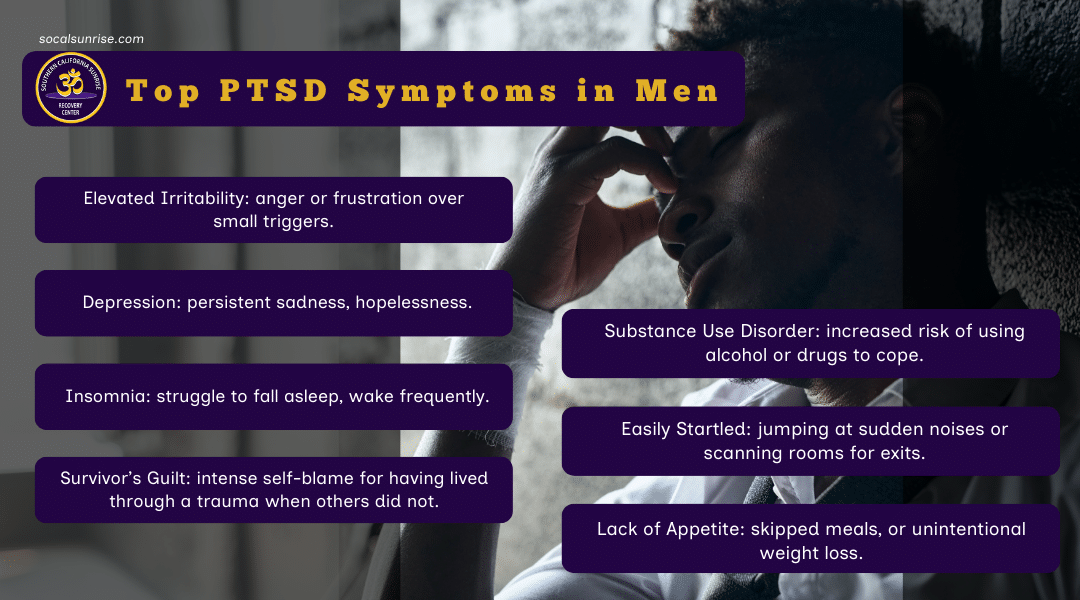
What are the Most Common PTSD Symptoms in Men?
These are some common PTSD symptoms in men to watch out for. It’s important to note that C-PTSD symptoms often look similar to PTSD.
Elevated Irritability
Men with PTSD may seem constantly “on edge,” reacting with anger or frustration over small triggers. This irritability often reflects underlying hyperarousal, feelings of threat, and difficulty relaxing after trauma or acute stress disorder.
Depression
PTSD and depression frequently occur together, leading to persistent sadness, hopelessness, and loss of interest in activities that once felt rewarding. Men may appear withdrawn, exhausted, or emotionally numb rather than overtly sad.
Insomnia
Many men with PTSD struggle to fall asleep, wake frequently, or experience nightmares related to the traumatic event. Chronic sleep disruption worsens concentration, mood, and emotional control during the day and may aggravate other mental health problems.
Survivor’s Guilt
Survivor’s guilt involves intense self-blame for having lived through a trauma when others did not, or for perceived mistakes during the event. Men may replay scenarios in their minds, criticize themselves harshly, and feel unworthy of happiness or safety.
Lack of Appetite
Stress-related changes in brain chemistry can lead to reduced appetite, skipped meals, or unintentional weight loss. Some men might appear “too busy to eat,” when in reality they are living with chronic anxiety or low mood.
Substance Use Disorder
Men with PTSD are at increased risk of using alcohol or drugs to cope with intrusive memories, anxiety, or sleep problems. Over time, this self-medication can develop into a co-occurring substance use disorder that requires integrated treatment from a mental health professional and addiction specialist.
Easily Startled
An exaggerated startle response—jumping at sudden noises, feeling “jumpy,” or scanning rooms for exits—is a hallmark of PTSD. Men may describe themselves as always “on guard,” even in safe situations.
The trauma you’ve experienced doesn’t have to define your future. Our admissions specialists are available 24/7 to discuss our proven PTSD treatment options and help you start reclaiming your life today.
What are the Common Red Flags of Male PTSD?
These red flags of male PTSD indicate immediate risk reduction might be required:
Uncharacteristic Reclusiveness
A man who once enjoyed socializing may begin avoiding friends, family gatherings, or activities he once loved. This withdrawal often stems from emotional numbness, shame, or a desire to avoid potential triggers.
Emotional Rants
PTSD can make emotional regulation difficult, leading to intense, sometimes disproportionate outbursts during conflict. These rants may be followed by remorse and confusion about why the reaction felt so overwhelming.
Visual Characteristics of Sleep Deprivation
Dark under-eye circles, frequent yawning, slowed thinking, or relying heavily on caffeine can signal chronic sleep loss. In PTSD, these visual signs often accompany reports of nightmares, night sweats, or difficulty staying asleep and may arise after traumatic experiences like military combat, a natural disaster, or a serious car accident.
Sad Countenance
A persistently “downcast” facial expression, flat tone of voice, or lack of visible enthusiasm can reflect underlying depression and emotional numbness. Loved ones may notice that the person rarely smiles or seems “like his old self.”
Mood Swings
Men with PTSD may shift quickly from calm to irritable, anxious, or shut down when reminded of their trauma. These mood swings can be confusing for partners and may be misread as personality changes rather than trauma responses or symptoms of PTSD.
Faltering Relationships
PTSD symptoms often strain communication, intimacy, and trust in relationships. Missed events, emotional distance, or frequent arguments can signal that untreated trauma is affecting the family system.
Making the decision to seek help is the hardest part, but you don’t have to do it alone. Contact our admissions team today to learn about our personalized PTSD treatment programs and find the path that’s right for you.
What are the Best Treatment Options for PTSD Symptoms in Men?
The good news is that PTSD in men is treatable. Here are some male PTSD treatment options:
Cognitive-Behavioral Therapy
Cognitive-behavioral therapy (CBT) helps men identify and challenge unhelpful thoughts such as self-blame, guilt, or catastrophic thinking tied to trauma. Through structured sessions, CBT teaches practical coping skills to reduce anxiety, improve mood, and change behavior patterns, and it can be combined with modalities like prolonged exposure.
Family Therapy
Family therapy brings loved ones into the healing process, improving communication and mutual understanding. It can help partners and family members learn how to support recovery while setting healthy boundaries.
One-on-One Treatment
Individual psychotherapy provides a private space to process traumatic memories, emotions, and beliefs at a safe pace. Therapists may use trauma-focused approaches such as CBT, eye movement desensitization and reprocessing (EMDR), prolonged exposure, or other evidence-based modalities to address PTSD directly.
This often starts with a comprehensive psychiatric evaluation and diagnosis.
Group Therapy
Group therapy allows men to connect with others who understand PTSD, reducing isolation and shame. Sharing experiences and coping strategies in a guided group can build confidence and reinforce recovery skills.
Intensive Outpatient Programs
Intensive outpatient programs (IOPs) offer structured, multi-day-per-week treatment while allowing men to continue work or family responsibilities. These programs typically combine individual therapy, groups, psychoeducation, and medication management when appropriate as part of a comprehensive trauma treatment plan.
12-Step Programs
For men who also struggle with alcohol or drug use, 12-step programs and peer-support groups can complement clinical PTSD treatment. These communities emphasize accountability, connection, and ongoing support in maintaining sobriety alongside other mental health services.
PTSD Treatment for Men at Southern California Sunrise Recovery Center
Southern California Sunrise Recovery Center in Mission Viejo provides residential mental health treatment for conditions including PTSD and co-occurring disorders. Men receive individualized care plans that may integrate CBT, psychotherapy, family involvement, and holistic supports in a safe, structured environment guided by experienced mental health professionals.
Those seeking help can contact the center’s admissions team to verify insurance, discuss program options, and start the recovery process while overcoming the stigma surrounding mental health.