
Panic attack vs. anxiety attack: when you’re experiencing distress, it’s important to know the difference. Panic attacks and anxiety attacks share some overlapping symptoms, but they differ in how suddenly they start, how intense they feel, how long they last, and how they are classified and treated in clinical practice. Understanding these differences can help someone know what they are experiencing and when to seek professional support.
Panic disorder treatments and anxiety disorder treatments will share some similarities while also accounting for these key differences.
Anxiety doesn’t have to control your daily life. At Southern California Sunrise Anxiety Treatment Center, our specialists help people throughout California regain control through evidence-based treatment approaches including psychotherapy, medication management, and comprehensive support systems. Learn more about our anxiety treatment programs in Orange County or call us today.
Panic Attacks Overview
Panic attacks are sudden episodes of intense fear or discomfort that peak within minutes and are often experienced as overwhelming and frightening. They are a core feature of panic disorder but can also occur with other anxiety and mood conditions.
What are panic attacks?
A panic attack is a brief, intense surge of fear that comes on quickly, often without clear warning, and reaches peak intensity within about 10 minutes. Panic attacks can be expected (linked to a known trigger) or unexpected (seemingly “out of the blue”).
Symptoms of panic attacks:
Common symptoms include a combination of strong physical sensations and catastrophic thoughts.
- Heart palpitations, chest pain or tightness, shortness of breath, sweating, shaking, or dizziness.
- Feelings of losing control, “going crazy,” or dying; feelings of detachment from self or surroundings (derealization or depersonalization).
Causes of panic attacks:
- Contributing factors can include genetics, brain chemistry, a history of anxiety or depression, and significant stress or trauma.
- Substance use, medical conditions, and certain medications can also trigger or worsen panic attacks for some people.
Panic attacks can also happen in unexpected settings — including behind the wheel. If you’ve ever experienced sudden fear or physical symptoms while driving, our guide to panic attacks while driving covers what to do immediately, how avoidance can make things worse over time, and what treatment options may help.
Duration and onset of panic attacks:
- Panic attacks usually reach peak intensity within minutes and often resolve within 10–30 minutes, though lingering fatigue or anxiety can last longer.
- The onset is typically abrupt, with symptoms escalating quickly rather than building gradually over hours or days.
Related read: Can You Die from a Panic Attack? What Expert’s Say
Anxiety Attacks Overview
“Anxiety attack” is not an official diagnostic term, but many people use it to describe episodes of intense, varying degrees of emotional overwhelm, escalating worry, and physical tension linked to ongoing stressors. These experiences are usually tied to generalized anxiety, social anxiety, or other anxiety disorders.
Related: Do I Have Anxiety? Take the Anxiety Self Test
What are anxiety attacks?
An anxiety attack often describes a period of heightened anxiety that builds over time in response to real or perceived stressors. It is more closely associated with persistent worry, muscle tension, and mental restlessness than with a sudden surge of terror.
What does an anxiety attack feel like? People often report racing thoughts, feeling “on edge,” dread about the future, and difficulty relaxing or concentrating. Physical sensations may include muscle tension, stomach upset, headaches, restlessness, and trouble sleeping rather than abrupt, peak-intensity symptoms.
Symptoms of anxiety attacks:
- Excessive worry, irritability, difficulty concentrating, feeling keyed up or easily fatigued.
- Physical symptoms such as mild to moderate chest tightness, trembling, sweating, nausea, increased heart rate, or shortness of breath that tend to be less intense than in a panic attack.
Causes of anxiety attacks:
- Long-term stress, unresolved trauma, personality traits (such as perfectionism), and co‑occurring mental health conditions can all contribute to anxiety episodes.
- Environmental factors such as work pressure, relationship problems, health concerns, or financial stress commonly fuel ongoing anxiety.
Duration and onset of anxiety attacks:
- Anxiety episodes usually develop gradually, building up over hours, days, or longer around ongoing worries.
- They can last much longer than a panic attack, sometimes persisting at a moderate level for days or weeks if underlying stress is not addressed.
Panic Attack vs. Anxiety Attack: Main Clinical Differences Table
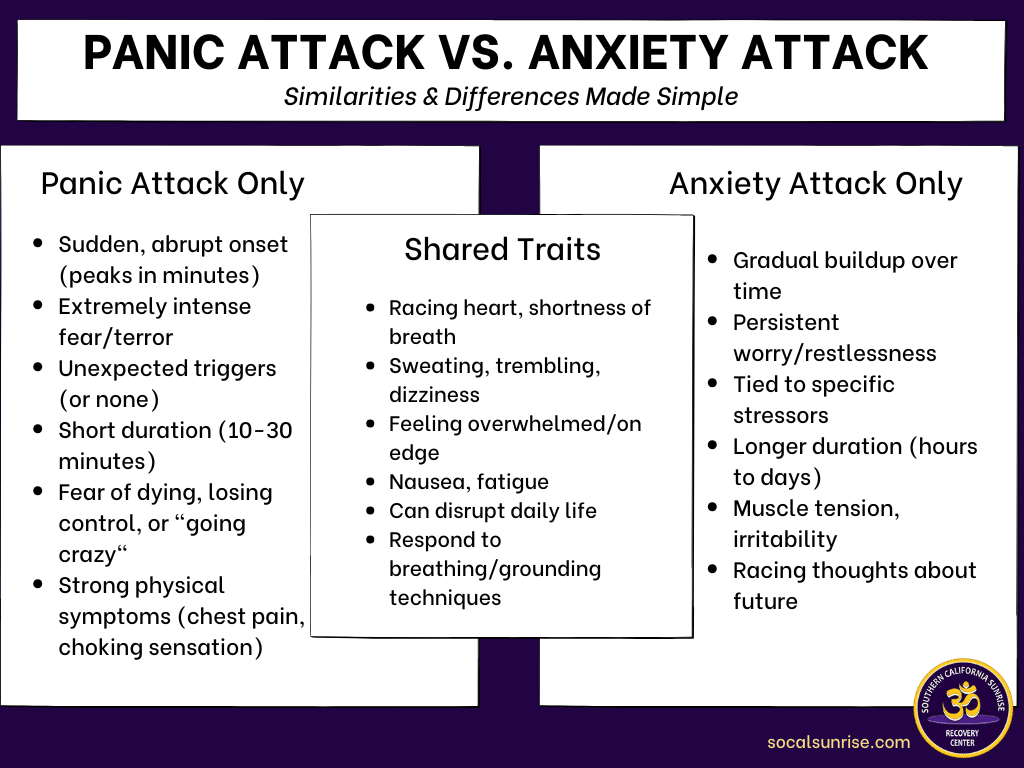
If anxiety symptoms are becoming too difficult to manage on your own, professional treatment can make a significant difference. Southern California Sunrise Anxiety Treatment Center offers personalized care designed to help you better control symptoms and improve your quality of life. Discover how our California anxiety specialists can help.
Panic Attack vs. Anxiety Attack: Causes & Risk Factors
Panic and anxiety attacks share overlapping symptoms but arise from different roots. According to the Diagnostic and Statistical Manual of Mental Disorders (DSM-5), panic attacks often involve sudden episodes of intense fear—triggering the body’s fight or flight response—while anxiety attacks typically develop gradually in response to prolonged worry or stress.
Common risk factors include adverse childhood experiences, post-traumatic stress disorder (PTSD), mood disorders, separation anxiety disorder, and obsessive-compulsive disorder (OCD). Medical professionals may also conduct blood tests or a physical examination to rule out heart or thyroid issues, as the American Heart Association notes that cardiovascular symptoms often mimic panic episodes. Addressing underlying behavioral health conditions early can prevent worsening patterns that affect relationships, work, and social functioning.
Panic Attack vs. Anxiety Attack: Treatment Options
Effective treatment often blends evidence-based therapies and supportive resources. Cognitive behavioural therapy (CBT) and Exposure Therapy help individuals retrain thoughts and reactions that fuel panic or anxiety. In some cases, Selective Serotonin Reuptake Inhibitors (SSRIs) can help balance brain chemistry.
Lifestyle adjustments and self-regulation tools—such as deep breathing exercises, breath control, mindfulness practices, and relaxation techniques—can help individuals ground yourself during distressing moments. For ongoing management, programs like outpatient treatment, support groups, and community resources enhance recovery and maintain stability.
National agencies like the American Psychiatric Association and National Helpline provide trusted information and referrals for those seeking help with panic and anxiety disorders. Untreated mental illness can cause physical and emotional symptoms that last forever.
When to Seek Professional Help For Panic Attack vs. Anxiety Attack
Seek professional support if panic or anxiety symptoms occur frequently, feel intensely distressing, or significantly interfere with daily life, such as work performance, school attendance, maintaining relationships, or basic self-care activities. Additional red flags include experiencing thoughts of self-harm, persistent feelings of hopelessness, or relying on alcohol, drugs, or other substances to cope with panic or anxiety episodes.
When anxiety interferes with work, relationships, or daily activities, it’s time to seek specialized support. Southern California Sunrise Anxiety Treatment Center provides expert care to help you regain stability and confidence. Our California-based specialists are ready to discuss treatment options tailored to your needs. Contact us to learn more.
Finding the Right Mental Health Provider
Look for licensed providers who specialize in anxiety disorders, panic disorder, and trauma-related conditions, prioritizing those skilled in evidence-based methods such as cognitive behavioral therapy (CBT) and behavioral therapy to ensure effective, targeted care.
Facilities like Southern California Sunrise Recovery Center offer comprehensive residential mental health treatment, including psychological evaluations and customized care plans tailored to severe anxiety and co-occurring disorders, helping individuals achieve lasting stability in a supportive environment.
Ready to take the next step toward managing your anxiety? Southern California Sunrise Anxiety Treatment Center in Orange County offers the expertise, evidence-based treatments, and compassionate support you need. Don’t let anxiety limit your life any longer—call our anxiety specialists today to discuss how we can help you move forward.