
Mental Health, Suicide, and Substance Use
Untreated mental health conditions can affect every part of a person’s life — from relationships and work to physical health and overall quality of life. One of the most serious risks associated with conditions like depression, bipolar disorder, and trauma-related disorders, and one that is often overlooked by loved ones and even by treatment providers, is suicide.
Dual diagnosis treatment connects all of these pathways to heal the whole person.
Table of Contents
For many people, this risk is compounded by co-occurring substance use. When a mental health condition and substance use occur together, each can intensify the other and make suicidal thoughts more likely. Understanding how these factors interact is an important step toward recognizing when someone needs support.
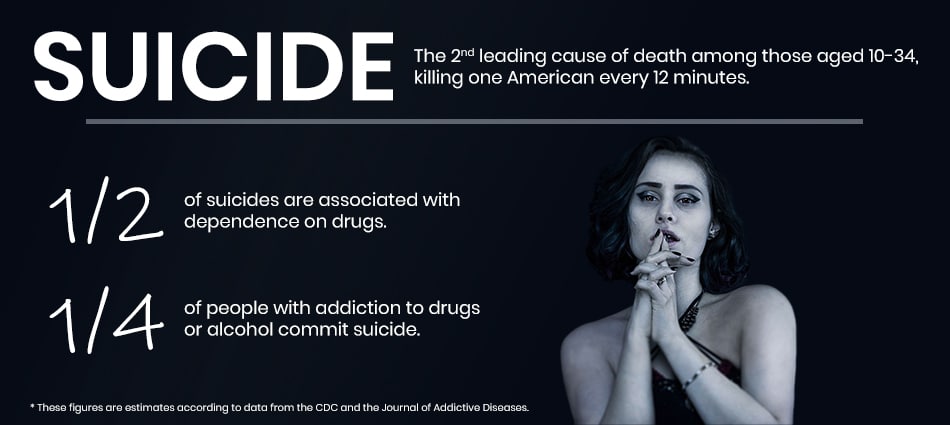
Suicide is one of the leading causes of death in the United States, particularly among young people. It is the 10th leading cause of death across all age groups and the second leading cause of death among people aged 10–34. In 2016, nearly 45,000 Americans died by suicide — approximately one death every 12 minutes — and 1.3 million adults attempted suicide. [1]
Mental health conditions are central to this picture. Research suggests that people living with alcohol dependence may be significantly more likely to die by suicide than the general population, and the risk appears higher still among people who use other drugs. Studies have found that a substantial share of suicide deaths involved alcohol or other substances at the time. [2] These figures point to substance use as one important risk factor among several — most often alongside an underlying mental health condition.
According to multiple studies, more than half of suicides are associated with co-occurring substance dependence, and a meaningful portion of people living with both a mental health condition and a substance use disorder are at elevated risk. The connection appears especially pronounced among adolescents. [3]
The Connection Between Mental Health, Substance Use, and Suicide
To understand suicide risk, it helps to start with mental health. Although not everyone who experiences depression has thoughts of suicide, depression is the single most common contributing factor. In 2014, roughly 60% of people who died by suicide were living with a mood disorder, including major depression, bipolar disorder, and dysthymia. [4] Where substance use is also present, the combination can deepen distress and raise risk further.
A 2018 national survey found that substance use was more common among adolescents and adults living with mental health conditions than among those who were not. [5] Many people experiencing a mood or anxiety disorder turn to alcohol or drugs in an attempt to self-medicate and relieve difficult feelings. Over time, this pattern can develop into a substance use disorder, which may worsen a depressive episode and, in turn, increase the likelihood of suicidal thinking. [6]
It is also important to understand that symptoms of depression can surface during early recovery from substances and may interfere with healing. When the underlying mental health condition is not treated directly, a person may continue to experience suicidal thoughts. This is why integrated care — treating the mental health condition and any co-occurring substance use at the same time — tends to offer the most stable path forward. [7]
Both mental health conditions and substance use can affect brain chemistry. Substances alter the brain’s reward and pleasure systems, which helps explain why people may lose interest in activities they once enjoyed. [8] They can also disrupt the neurotransmitters that regulate mood and judgment, contributing to feelings of apathy, hopelessness, and strained relationships — feelings that, when left untreated, can heighten suicide risk. [3]
Changes in judgment can also play a role. People living with a substance use disorder alongside suicidal thoughts may face an elevated risk of acting impulsively, which is significant because impulsivity is one of the factors that can make suicide harder to predict. [9]
Genetics may also help explain the connection. Some people have a higher inherited likelihood of developing a substance use disorder, and a family history of addiction increases that probability. [10] Similarly, a family history of suicide, depression, or impulsive behavior can contribute to risk. Because depression is so closely tied to suicide, these overlapping genetic factors often appear together. [10]
Common Risk Factors for Substance Abuse and Suicide
Risk Factors for Mental Health Conditions and Suicide
Several factors can raise the likelihood that someone will experience suicidal thoughts or attempt suicide. These generally fall into mental health, environmental, and historical categories. [15]
Mental Health:
- Depression
- Bipolar disorder
- Schizophrenia
- Anxiety disorders
- Aggressive behavior
- Co-occurring substance use
Environmental:
- Access to lethal means (such as firearms or drugs)
- Prolonged stress
- Harassment or bullying
- Relationship issues or divorce
- Rejection
- Financial distress
- Exposure to suicide
Historical:
- Early use
- Family history of addiction
- Childhood abuse or trauma
Risk Factors for Substance Use
Because substance use so often co-occurs with mental health conditions, it helps to recognize what can contribute to its development. [11] [12] [13]
Mental Health: 15
- Depression
- Attention-deficit/hyperactivity disorder (ADHD)
- Post-traumatic stress disorder (PTSD)
- Anxiety disorders
- Aggressive behavio
Environmental: 15
- Access to substances
- Peer pressure
- Prolonged stress
- Lack of adult supervision
- Financial distress
Historical: 15
- Early use
- Family history of addiction
- Childhood abuse or trauma
Most Common Shared Risk Factors
Mental health conditions, suicide, and substance use share many of the same underlying risk factors. Again, no single factor is the sole cause — it is usually a combination that shapes a person’s risk.
Mental Health:
- Depression
- Anxiety disorders
- Aggressive behavior
Environmental:
- Access (i.e. drugs for substance abuse, lethal means for suicide)
- Prolonged stress
- Financial distress
- Exposure (i.e. peer drug use for substance abuse, exposure to suicide for suicide)
Historical: 15
- Previous use (substance abuse) or attempts (suicide)
- Family history of substance abuse or suicide
- Childhood abuse or trauma
Exposure to multiple risk factors, including depression and substance abuse, does not determine with certainty that someone will consider suicide. However, if someone does express thoughts of suicide, they are always to be taken seriously.
If someone has attempted suicide in the past, they are at very high risk for doing so again when triggered. While a previous suicide attempt does not guarantee someone will attempt suicide in the future, it is vital to treat the individual and ensure their safety.
Warning Signs
Talking about suicidal thoughts is an obvious warning sign, but it is not the only one. Warning signs can appear in what someone says, how they behave, and how their mood shifts.
- Killing themselves
- Feelings of hopelessness
- Their life having no meaning
- Being a burden
- Feeling trapped
- Extreme pain
- Increased use of drugs and alcohol
- Searching online for ways to commit suicide
- Ending engagement in activities they once enjoyed
- Isolation from friends and family
- Sleeping more or less than normal
- Visiting or calling people to say goodbye to them
- Giving away possessions that are important to them
- Unusually aggressive
- Abnormal fatigue
- Depression
- Anxiety
- Loss of interest
- Irritability
- Shame and guilt
- Anger and agitation
- Relief or sudden improvement
If someone is displaying these warning signs, it is essential to take them seriously, even if they are not verbally expressing thoughts of suicide. A stressful event may trigger the individual and create a situation in which suicide can occur.
Prevention and Support
Even when someone is living with a mental health condition, suicidal thoughts, and co-occurring substance use, suicide is not inevitable. Loved ones can begin by opening an honest, caring, and non-judgmental conversation. [17][18]
Evidence suggests that talking openly about suicide, offering steady support, and reducing access to lethal means — including firearms and dangerous substances — may help save a life. Above all, connecting the person with a mental health professional is the most reliable way to get meaningful help. [17]
For co-occurring substance use, staying engaged in treatment and building relapse-prevention skills are important parts of recovery. Easing withdrawal symptoms such as restlessness, insomnia, depression, and anxiety can make early treatment more manageable, and ongoing therapy can help reduce the risk of relapse. [19] When substance use is treated alongside the underlying mental health condition rather than in isolation, recovery tends to be more durable.
If you or someone you love is in crisis, you can reach the 988 Suicide & Crisis Lifeline by calling or texting 988, available 24/7. In an immediate emergency, call 911. Short-term steps — an open conversation, removing access to weapons or substances — can help create safety until professional care is in place.
Treatment at Southern California Sunrise Recovery Center
Here at Southern California Sunrise Recovery Center, we believe that lasting recovery begins with treating the whole person. Because mental health conditions and substance use are so often intertwined, we focus on the root of what someone is experiencing rather than any single symptom.
Our residential mental health treatment provides 24/7 structured care for adults living with moderate to severe conditions such as depression, bipolar disorder, anxiety disorders, and trauma-related disorders — the conditions most closely linked to suicide risk. For those navigating mental health and substance use at the same time, our dual diagnosis program is designed to address both together, in one integrated plan of care, so that neither condition is left untreated.
Within our residential setting, evidence-informed therapies — including individual and group psychotherapy, cognitive behavioral therapy, and dialectical behavior therapy — help residents stabilize, process underlying causes, and build skills for the road ahead. Continued aftercare supports long-term wellness and helps reduce the likelihood of relapse.
If you’re concerned about yourself or a loved one, we’re here to help you understand your options. Call us anytime at (844) 563-2563, or verify your insurance to take the next step.
References & Resources
- Centers for Disease Control and Prevention. (2018). Preventing Suicide. Retrieved August 31, 2020, from https://www.cdc.gov/violenceprevention/pdf/suicide-factsheet.pdf
- Wilcox, H. C., Conner, K. R., & Caine, E. D. (2004, December 7). Association of alcohol and drug use disorders and completed suicide: An empirical review of cohort studies. Retrieved August 31, 2020, from https://pubmed.ncbi.nlm.nih.gov/15555812/
- Miller, N. S., Mahler, J. C., & Gold, M. S. (1991). Suicide risk associated with drug and alcohol dependence. Journal of addictive diseases, 10(3), 49–61.
https://doi.org/10.1300/J069v10n03_06 - Digital Communications Division. (2014, September 16). Does depression increase the risk for suicide? Retrieved August 31, 2020, from https://www.hhs.gov/answers/mental-health-and-substance-abuse/does-depression-increase-risk-of-suicide/index.html
- Substance Abuse and Mental Health Services Administration. (2019). Key substance use and mental health indicators in the United States: Results from the 2018 National Survey on Drug Use and Health (HHS Publication No. PEP19-5068, NSDUH Series H-54). Rockville, MD: Center for Behavioral Health Statistics and Quality, Substance Abuse and Mental Health Services Administration. Retrieved from https://www.samhsa.gov/data/sites/default/files/cbhsq-reports/NSDUHNationalFindingsReport2018/NSDUHNationalFindingsReport2018.pdf
- NIDA. 2020, July 13. Addiction and Health. Retrieved from https://www.drugabuse.gov/publications/drugs-brains-behavior-science-addiction/addiction-health on 2020, August 31
- Center for Substance Abuse Treatment. Managing Depressive Symptoms in Substance Abuse Clients During Early Recovery. Treatment Improvement Protocol (TIP) Series, No. 48. HHS Publication No. (SMA) 13-4353. Rockville, MD: Substance Abuse and Mental Health Services Administration, 2008.
- NIDA. 2020, July 10. Drugs and the Brain. Retrieved from https://www.drugabuse.gov/publications/drugs-brains-behavior-science-addiction/drugs-brain on 2020, August 31
U.S. National Library of Medicine. (1970, January 1). Addressing suicidal thoughts and behaviors in substance abuse treatment. National Center for Biotechnology Information. Retrieved January 25, 2022, from https://www.ncbi.nlm.nih.gov/books/NBK64022/
- Wilcox H. C. (2004). Epidemiological evidence on the link between drug use and suicidal behaviors among adolescents. The Canadian child and adolescent psychiatry review = La revue canadienne de psychiatrie de l’enfant et de l’adolescent, 13(2), 27–30.
- Mayo Clinic. (2017, October 26). Drug addiction (substance use disorder). Retrieved August 31, 2020, from https://www.mayoclinic.org/diseases-conditions/drug-addiction/symptoms-causes/syc-20365112
- NIDA. 2020, May 25. What are risk factors and protective factors?. Retrieved from https://www.drugabuse.gov/publications/preventing-drug-use-among-children-adolescents/chapter-1-risk-factors-protective-factors/what-are-risk-factors on 2020, August 31
- MNT Editorial Team. (2018, October 26). Addiction: Risk factors for addictive disorders (T. J. Legg Ph.D., CRNP, Ed.). Retrieved August 31, 2020, from https://www.medicalnewstoday.com/articles/323467
- NIDA. 2020, July 13. Drug Misuse and Addiction. Retrieved from https://www.drugabuse.gov/publications/drugs-brains-behavior-science-addiction/drug-misuse-addiction on 2020, August 31
- American Foundation for Suicide Prevention. (2020, January 24). Risk factors and warning signs. Retrieved August 31, 2020, from https://afsp.org/risk-factors-and-warning-signs
- National Institute of Mental Health. (2019, July). Suicide Prevention. Retrieved August 31, 2020, from https://www.nimh.nih.gov/health/topics/suicide-prevention/index.shtml
- The National Suicide Prevention Lifeline. (n.d.). We Can All Prevent Suicide. Retrieved August 31, 2020, from https://suicidepreventionlifeline.org/how-we-can-all-prevent-suicide/
- Mayo Clinic. (2017, October 26). Drug addiction (substance use disorder). Retrieved August 31, 2020, from https://www.mayoclinic.org/diseases-conditions/drug-addiction/symptoms-causes/syc-20365112
- NIDA. 2020, July 10. Treatment and Recovery. Retrieved from https://www.drugabuse.gov/publications/drugs-brains-behavior-science-addiction/treatment-recovery on 2020, August 31